


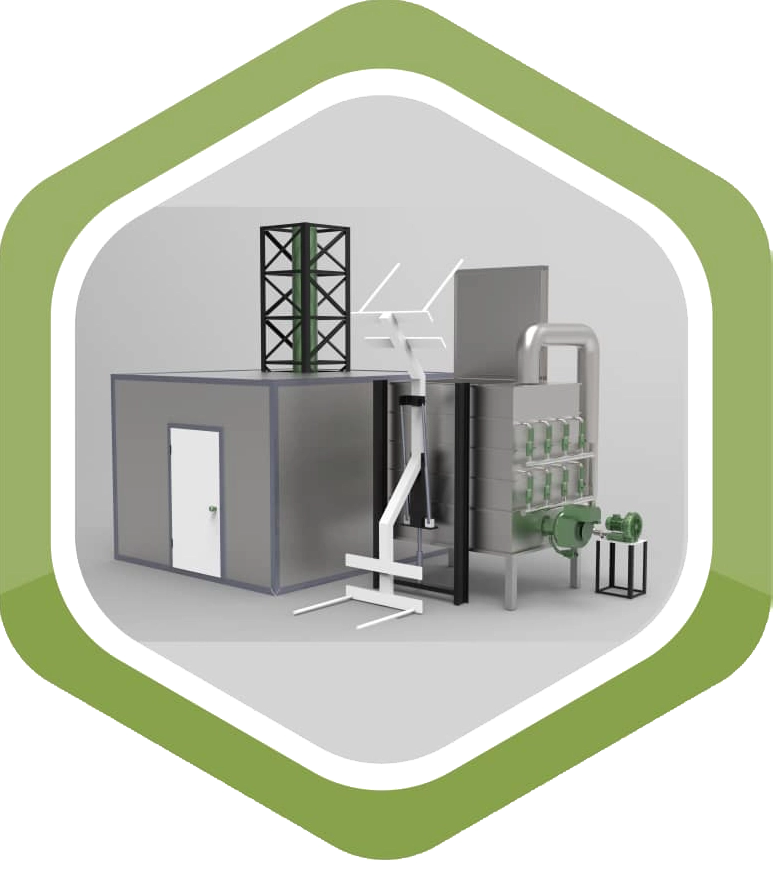
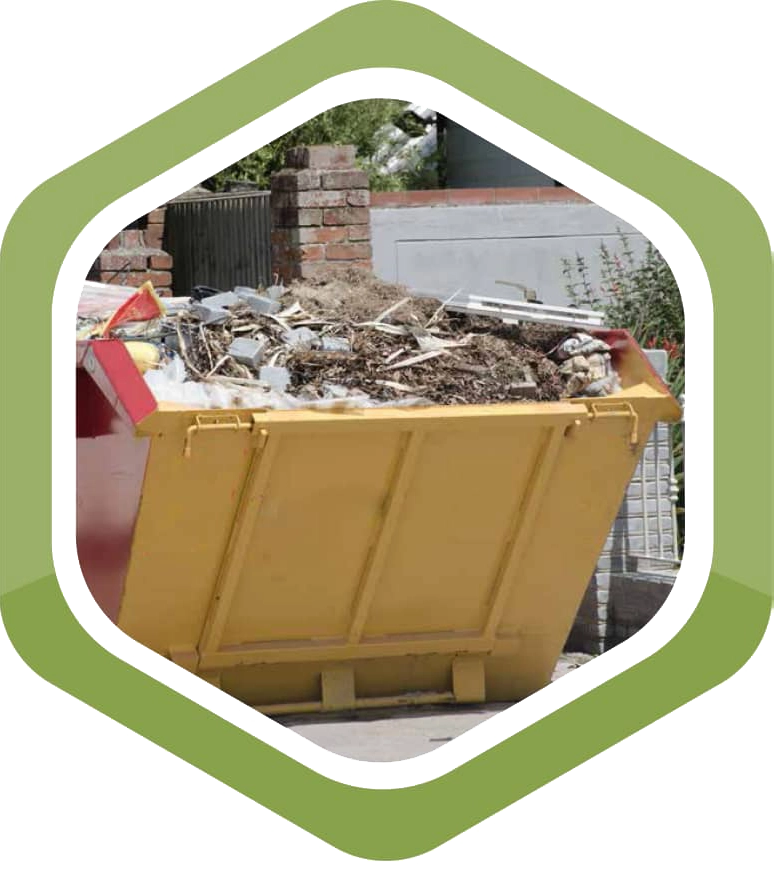

Garbage burning
Incineration is the complete combustion of waste with additional oxygen to produce carbon dioxide, water vapor and ash.
Garbage incineration process parts:
The waste incineration process begins with the delivery of fuel to the unit. The waste is delivered by collection trucks to the waste management and possibly segregation facilities.
To prevent environmental pollution, waste separation should be done under controlled conditions. Recyclable materials may be removed at this stage; Although metal materials are often recycled after combustion.
The feeding of the old waste incinerators was done all at once and manually. The design of these waste incinerators was based on the use of flat grids, which led to incomplete burning of waste and combustion gases. In new mass-burning units, the use of a continuous feeding system along with the development of inclined back-and-forth networks, as well as a better distribution of primary air, has led to the improvement of the combustion process and, as a result, a significant improvement in the performance of the mass-burning system. In large urban solid waste mass incineration units, feeding is done by a overhead crane with a movable bridge and a rake.
- The common method of thermal treatment of waste is burning it directly in a combustion chamber of a furnace with a special network, a process often called mass burning.
- Another method is to use a floating bed combustion system. Since such a system is suitable for burning homogeneous fuels. Municipal solid waste needs to be processed and converted into waste-derived fuel before being used in this system.
- Another method is to use a rotary kiln. Rotary kilns are usually used to burn waste with low calorific value or hazardous waste.
The gases resulting from the combustion of waste, which carry the energy released in the furnace, must be cooled before entering the air pollution control system.
In order for the gases resulting from the combustion of a waste incineration unit to be released into the atmosphere, the gases resulting from the combustion of municipal solid waste must be sufficiently cleaned, in addition to non-burnable particles (suspended ash), the content of polluting gases and also pollutants. organic and heavy metals.
In order to remove or reduce the concentration of pollutants in the gases resulting from combustion and bring them to the permitted values required in the environmental standards, before discharging into the atmosphere through the chimney, all new waste incinerators are equipped with air pollution control or gas purification systems.
For more information, you are suggested to read the following pages
Depending on the type of pollutant whose absorption is the main focus of the process, air pollution control equipment can be classified as follows:
- Equipment for removing suspended particles, equipment for removing acid gases
- Nitrogen oxides removal equipment
- Equipment for removing organic compounds and heavy metals
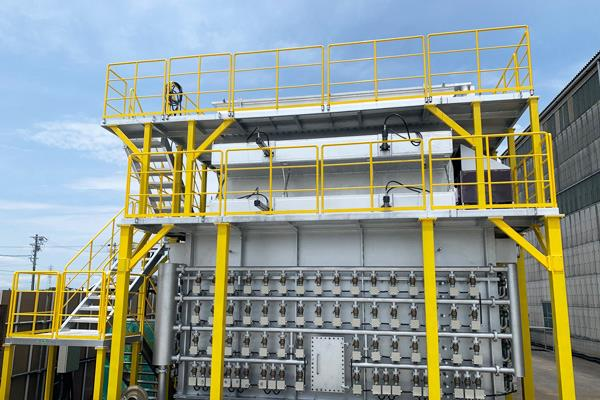
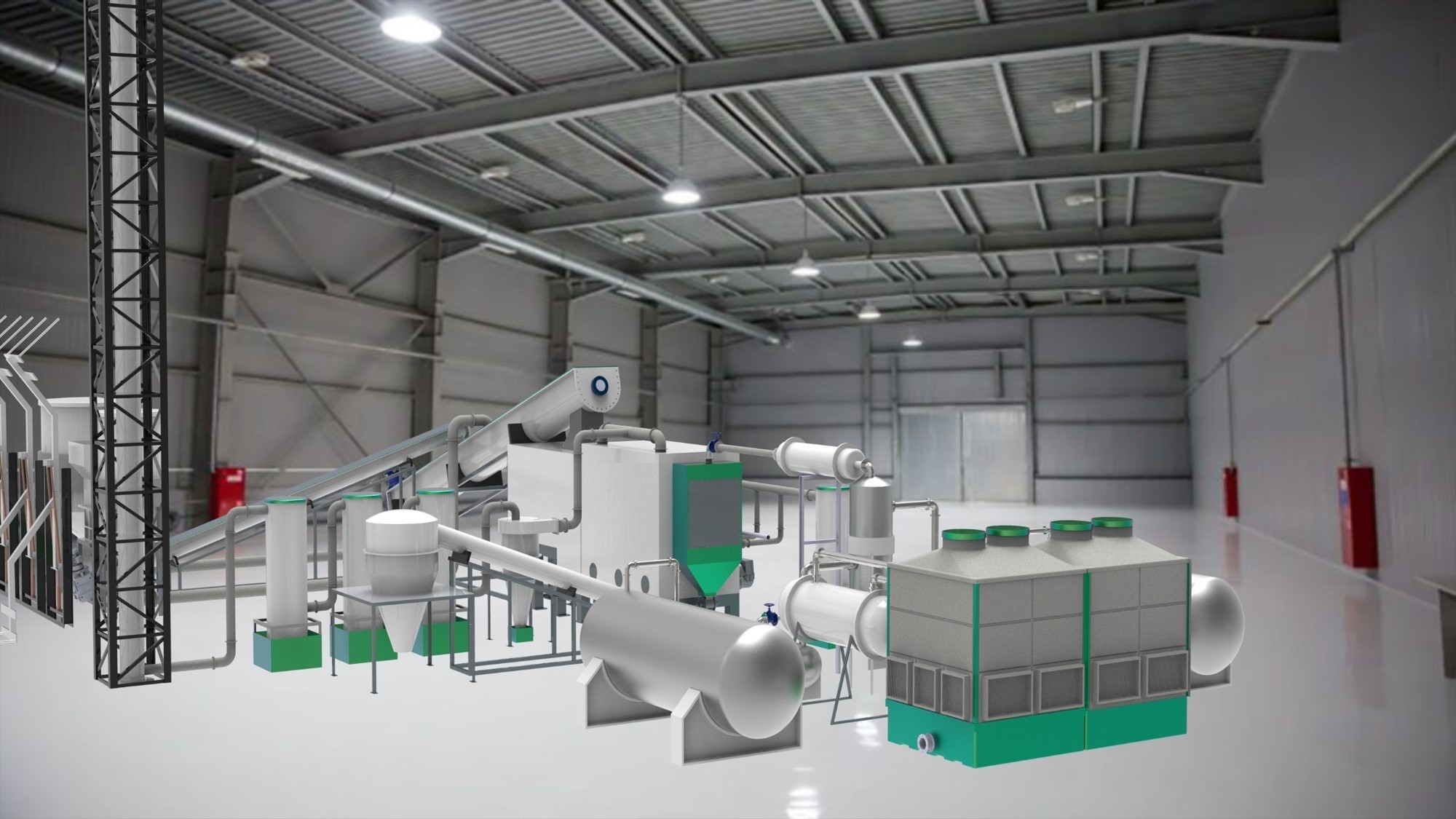
The process and equipment of the urban waste incinerator of Nabandish Banyan Company:
- Furnace feeding funnel: to transfer waste into the furnace
- Control valve: to control the amount of incoming waste with a smart system
- Reactor: materials are dried at high temperature.
- Air inlet: to supply air for waste combustion in the reactor
- Water tank and ash outlet: The resulting ash is collected at the bottom of the furnace
- Exhaust gas cooling: The exhaust gas is cooled from the secondary chamber, whose temperature is above 1000 degrees Celsius.
- Water collection tank: to store condensed water
- Exhaust gas scrubber: scrubbers are installed to remove acid from exhaust gases resulting from combustion, which neutralizes acid gas containing SO2 and HCl by alkaline spray (NaOH solution). After removing the acid, the temperature of the gas decreases.
- Gas storage tank: to store the exhaust gas
- Activated carbon: after collecting its dust, the gas from combustion enters the activated carbon absorption column to remove gaseous heavy metals.
- Using catalytic oxidizers to remove volatile organic compounds (injection of additives such as ammonia)
- Condensed water filter: for water purification
- Sewer discharge channel: the direction of sewage discharge
- Exhaust chimney: Its function is to remove the burnt gases from the device, the height of which is different according to the type of device, location and amount of produced gases.
Technical specifications of the urban waste incinerator of Nab Andish Bonyan Company:
Type of incoming waste: | Urban waste |
Final furnace temperature: | 1100 degrees Celsius |
Time left: | 10 seconds |
Waste feeding: | Continuous |
Ash transfer method: | Continuous |
Pollutant control method: | Filter, scrubber |
Gas analyzer: | has |
Project implementation: | EPC |